
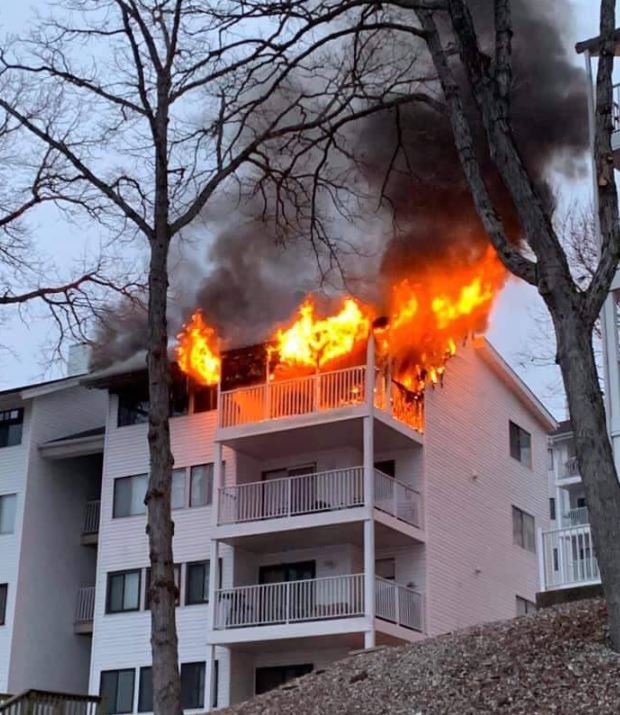
Most of our blog posts relate to questions our clients have asked over the years or the sharing of information we believe our readers need to know about home buying, home selling or home financing. With this post we’re starting to mix things up a little by also sharing our stories as professionals. These are essentially the things we’ve learned. We hope you enjoy reading these stories as much as we’ve grown by living them. The narratives run the gamut. You’ll find humor, poignancy, sadness, quirkiness and everything in between—it’s all a matter of course when serving others. The one overriding theme is that virtually all of these accounts are educational. We promise you’ll obtain valuable information. So let’s get started. With no further delay, here’s the account of the Smoldering Embers.
About 15 years ago one of our clients owned and occupied a condominium in mid-city San Diego. This condominium complex is a series of buildings and each building has four units—2 units on the bottom and 2 on the top. My client’s condo faces north and the balcony/patios are on the east side of the building.
On a gorgeous (but somewhat windy) Saturday afternoon the upstairs neighbor was barbecuing on the balcony. Like millions of Americans the neighbor owned a charcoal grill. As the neighbor removed the last items from the grill and placed them in a pan he heard the phone ringing. He hurried inside—forgetting to close both the cover on the charcoal grill and the sliding glass balcony doors—sat down the pan, and answered the phone. After talking for a few minutes he grabbed his car keys and made a quick trip to Albertsons to pick up mayonnaise and relish to whip up a batch of his mom’s old fashion potato salad.
There was a nice westerly breeze that day and as the wind blew, smoldering embers from the charcoal grill became airborne and made contact with the cloth curtains that hung inside the sliding glass balcony doors (remember, the same sliding glass balcony doors that were left open). The curtains ignited and the flame spread to the cabinets, and with the help of a few household chemicals beneath the sink, accelerated. Soon the entire condo was engulfed in flames and so was almost half of my client’s unit directly.
My client was out of town, the grill master had gone to the market, and apparently none of the neighbors noticed the building was on fire. Luckily, a local news helicopter crew was en route to cover another story and decided to circle back because the fire was more compelling. Of course the news crew notified the fire and police department. Otherwise it’s likely much more damage would have occurred.
Okay, nice story, but as a property owner or would-be property owner, what’s the take away? There are several:
- Stuff Happens! Once you’re a homeowner it’s no longer just a matter of calling the landlord. Now it’s your baby!
- This is among the reasons many landlords prohibit charcoal grilling on the balcony. If grilling of any kind is allowed it’s typically restricted to propane, methane, natural gas or electricity.
- Flame retardant curtains may be a good idea in the kitchen/balcony/patio area.
- When purchasing a home always ask if there have ever been any insurance claims. If so:
- What was the nature of the claim (fire, earthquake, etc.)?
- When did the claim arise (date of loss)?
- What was the extent of the damage?
- What was repaired or replaced?
- Who was the contractor?
- Were permits required?
- Does the seller have a copy of the permits?
- Are there any receipts or warranties?
- Are the warranties transferable?
- How much did the insurance company pay?
- How much was the owner’s responsibility?
- How much, if applicable, was the HOA’s responsibility?
- Is there a Fire Incident Report?
5. Once the Fire Incident Report is received, please read it (every jot and tittle). You’ll want to make sure any circumstances that lead to the previous fire no longer exist.
6. Please note that Fire Incident Reports in some areas can take a week or so to obtain, and may not be free. In addition, payment may be required in advance.
7. If there are prior insurance claims, obtain a quote for hazard insurance BEFORE your purchase contract contingency clauses expires. If the existing owner has a series of insurance claims your ability to obtain coverage may be impacted, and if coverage is available the cost may be higher. Also note that if you have a couple of claims on the home you’re moving from and the seller has a couple of claims on the home you’re moving to, you may have an even greater issue. Again, if there’s going to be a problem, you want to find out while you can still cancel the purchase contract without penalty.
We’ll see you at the next Post.